This plant may be available to buy
Click the banana to see

|
Red Sealing Wax Palm click pic to enlarge |
|
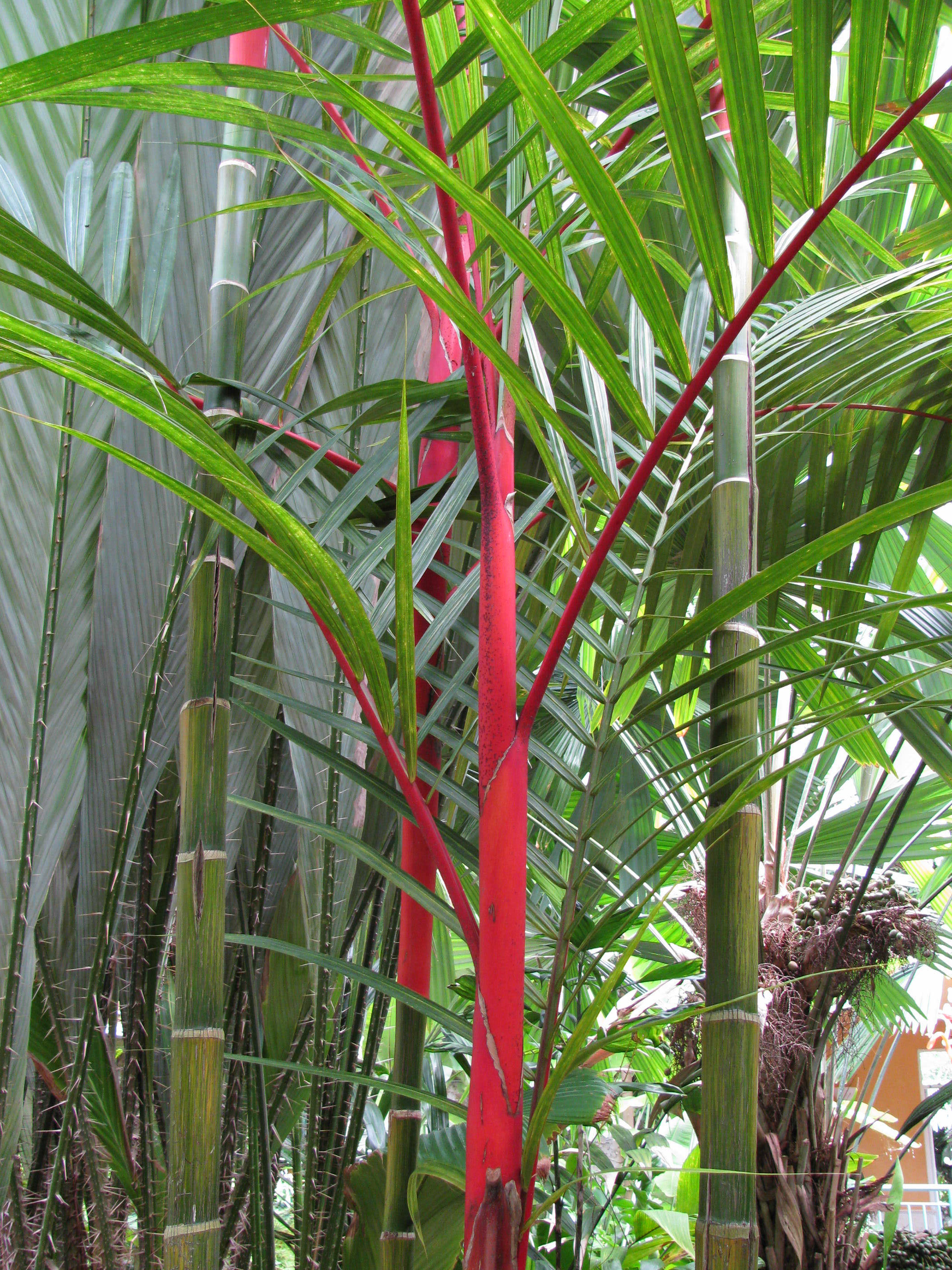
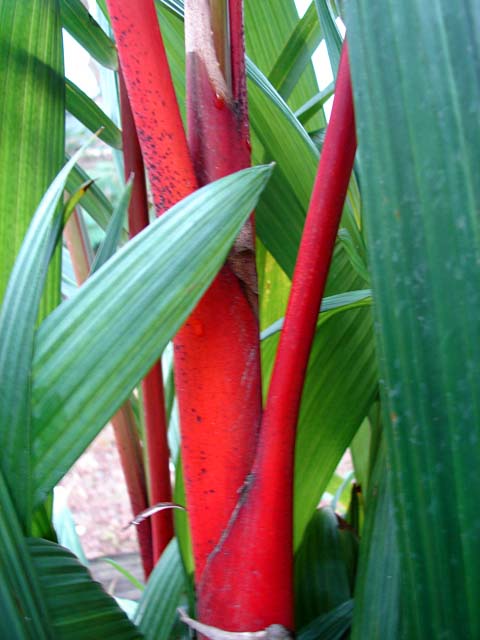
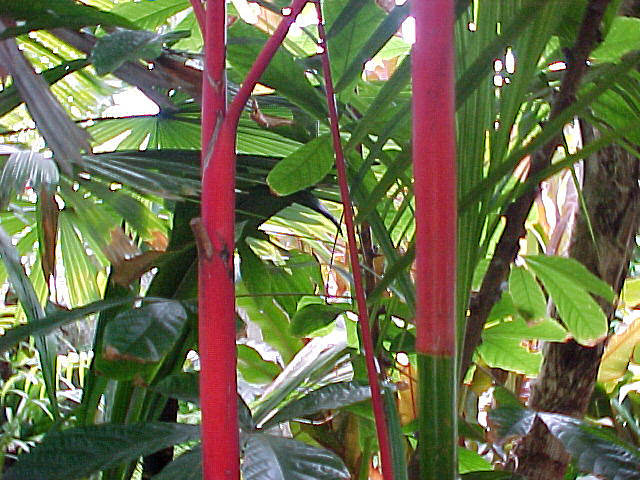
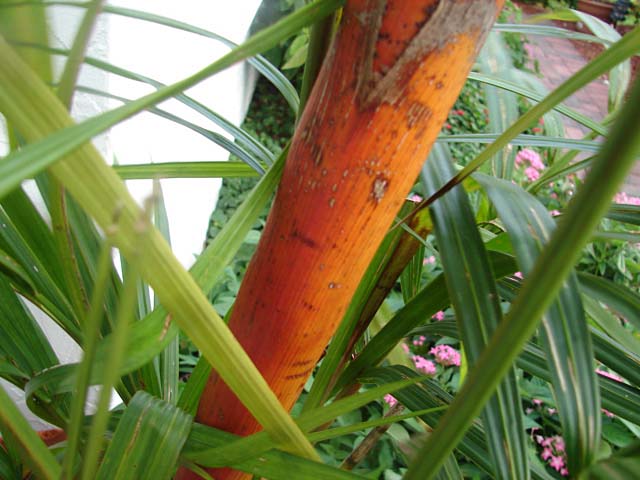
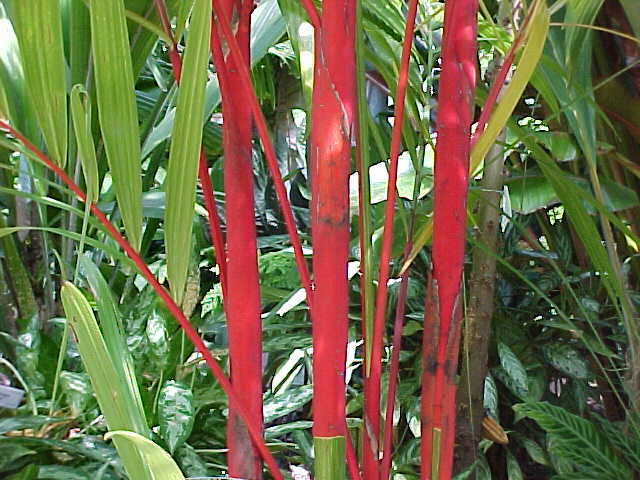
Zone 10 or Houseplant Crytostachys lakka, Red Sealing Wax Palm is native to Malaya and widely dispersed in Southeast Asia. Many say Sealing Wax Palm is the most beautiful palm in the world The main attraction is the deep red leaf sheaths of this clustering palm. Mature wood is a typical gray color New sprouts are nice like this fine stem
click pic to enlarge The name comes from Chinese sealing wax which is a very similar red color
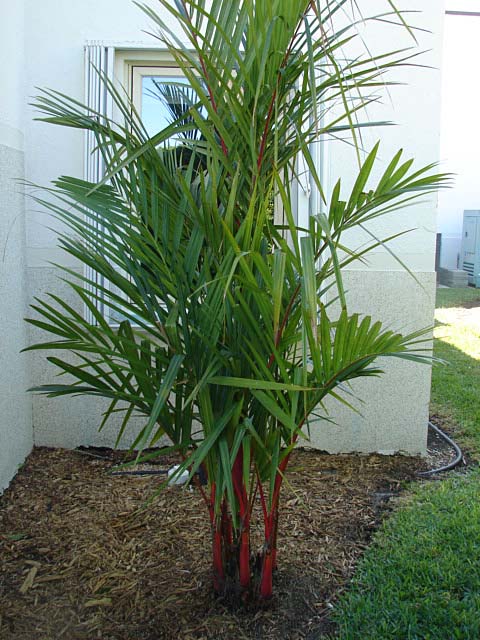
click pic to enlarge In Florida, Crytostachys lakka is rated to 15 feet and is a very slow grower. In the wilds of Borneo, for example, this palm grows 2x-3x taller. Plant in light shade to full sun in South Florida
click pic to enlarge Seeds are very slow to germinate, sometimes up to one year. Fresh seeds germinate much more quickly, but are still slow. Young plants stay small (a few inches tall) for perhaps 3 years, then begin to grow, and slowly
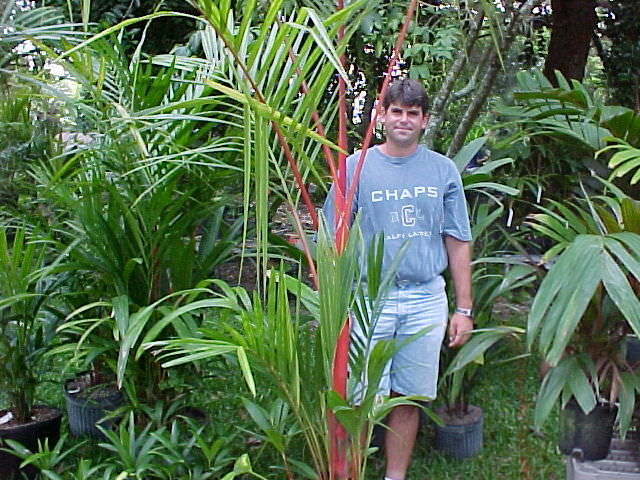
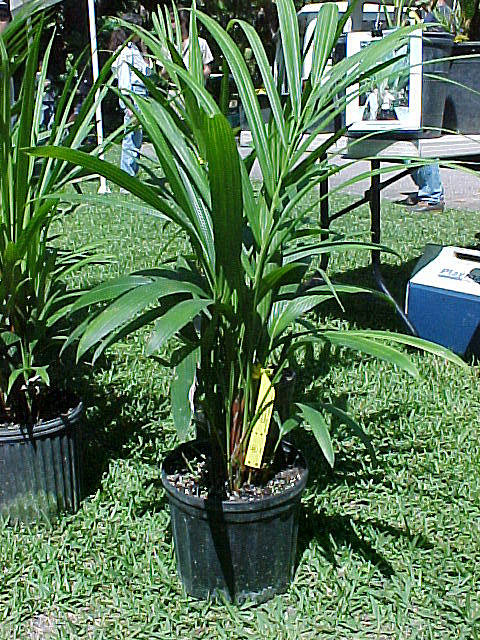
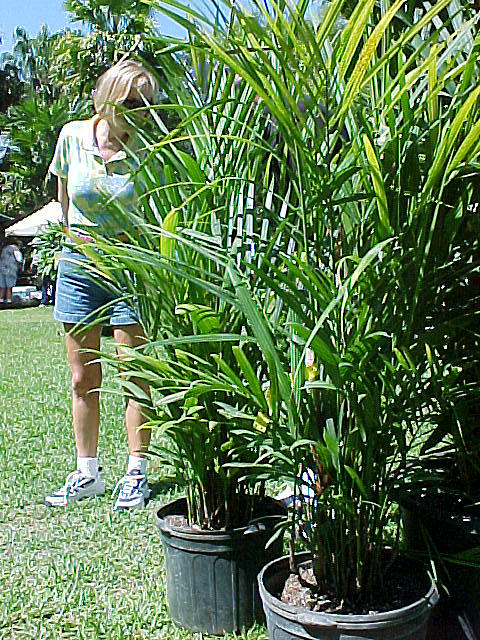
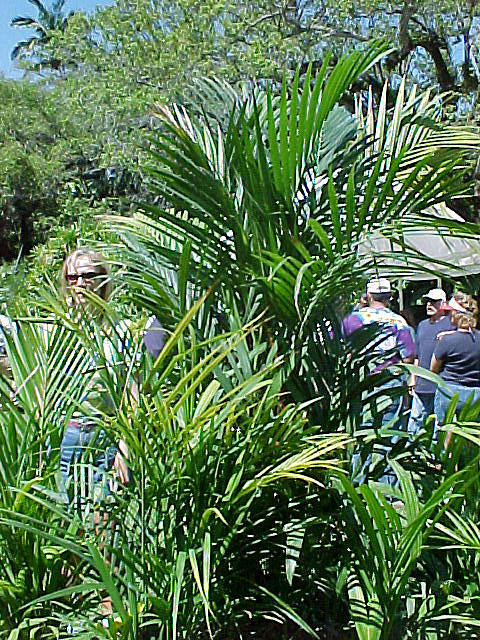
click pic to enlarge Prices, therefore, are understandably high for both seeds and well grown plants. Here is a Red Sealing Wax offered for sale at $1,000 at a recent palm show Major cost factors include poor germination and heavy seedling losses. If they live, the first 7 years grows a palm to this size. Two more years and you have this. Two more years ( 11 total) & you have a hearty specimen, beautiful and valuable Also, we have seen Nature's rare orange version...
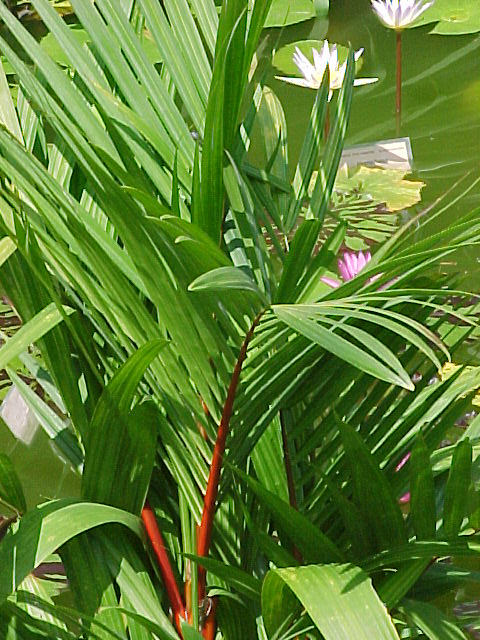
click pic to enlarge Red Sealing Wax Palm demands rich, moist, loamy soils. It is not tolerant of cold, drought or wind. It has no major pests or disease problems For collectors, the main issue and point of discussion has always been temperature Some say temperatures below 55 degrees are fatal. Others say 40 degrees is the limit. The conventional wisdom has been that below some temperature Sealing Wax quickly dies or is fatally wounded We met a grower, Steve Stein, who disputes the claim of cold damage. He indicated that there is a fungus, Gliocadium, which is resident with Red Sealing Wax Palm which suddenly becomes active below 70 degrees. Steve says it is the Gliocadium fungus and not the cold which is dangerous to Sealing Wax. He recommends a thorough application of fungicide every November in South Florida to preempt problems Red Sealing Wax may be difficult as a houseplant due to its tropical climate requirements of light, heat and humidity. In this picture, Red Sealing Wax Palm is growing very happily in a submerged pot in a pond |