This plant may be available to buy
Click the banana to see

|
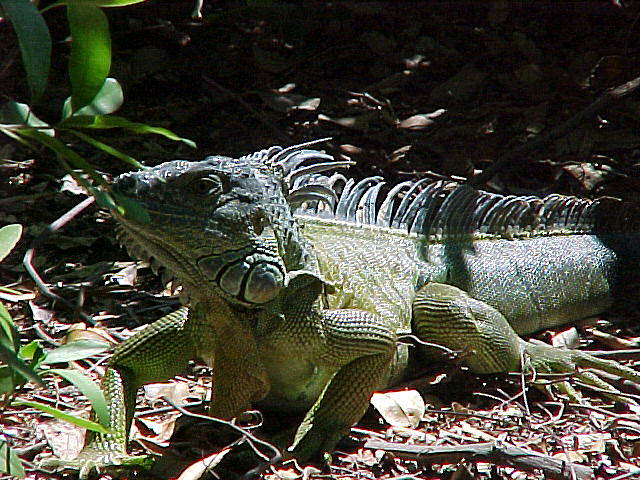
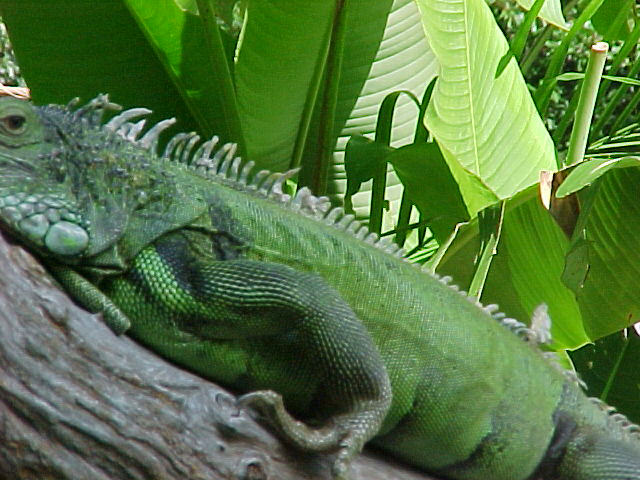
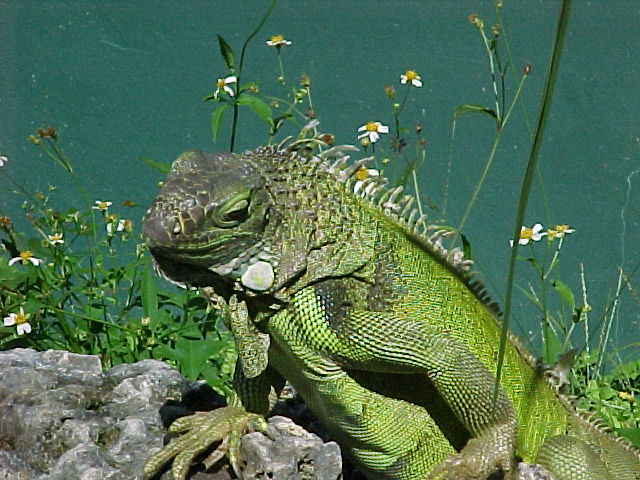
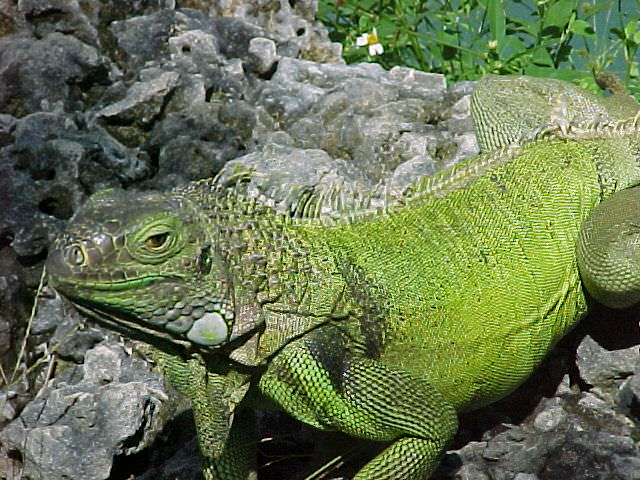
Iguana Invasion and Control click pic to enlarge There are increasing reports from homeowners, motorists and tourists of Iguana lizards scaring folks throughout South Florida. It appears all of Palm Beach, Broward, Miami-Dade, and Monroe counties are affected (as in invasion) There are three types to contend with, all feral (non-native, gone wild) in South Florida. (1) "common green" variety, the (2) "Mexican spiny-tailed" and (3) "black spiny-tailed" iguana. Have heard there is a 4th variety here as well :( Perhaps hundreds of thousands of feral Iguana now roam the countryside, but also prominent in upscale neighborhoods, especially near water, like the Intracoastal Waterway. NOTE: the Florida cold winter of 2009-2010 seems to have killed off many, but far from all
click pic to enlarge Even in The Florida Keys such as Big Pine Key in Monroe County are inundated. Iguanas are so thick they cause traffic hazards as they amble across the road, especially US-1 The Florida Fish and Wildlife Conservation Commission is not helpful at this time (October 2003). Checking their website yields no help for homeowners losing fruit and flowers and other foliage to Iguana dining ...it is said red is their favorite flower (color) to eat The University of Florida has additional information, but no good news for you, sorry. Their statements include, "Damage caused by iguanas includes eating valuable landscape plants, shrubs, and trees, eating orchids and many other flowers, eating dooryard fruit like berries, figs, mangos, tomatoes, bananas, lychees, etc. Iguanas do not eat citrus. Burrows that they dig undermine sidewalks, seawalls, and foundations. Burrows of iguanas next to seawalls allow erosion and eventual collapse of those seawalls. Droppings of iguanas litter areas where they bask. This is unsightly, causes odor complaints, and is a possible source of salmonella bacteria, a common cause of food poisoning. Adult iguanas are large powerful animals that can bite, cause severe scratch wounds with their extremely sharp claws, and deliver a painful slap with their powerful tail." The full U of F article is here Quoting part of a Miami Herald article, "The lizards, Bergh said, love to swim, tend to defecate near water -- meaning boats, seawalls, and Jacuzzi platforms -- and are known to carry nasty germs, such as salmonella, that can be transferred to humans. They munch on foliage and flower blossoms, especially bright-colored ones like hibiscus. Fearless climbers with sharp toenails, they can easily scale treetops that are out of reach for other species." In the West Indies, the problem is exotic pests like rats, feral cats, mongoose, etc are invading Iguana habitats. In one report, four tactics are used to protect Iguana territories including (1) shooting, (2) poisoning, (3) trapping and (4) disease. Reading this information indicates that without deep commitment and effort over time, we have no chance to either eradicate or control the Iguana invasion of South Florida
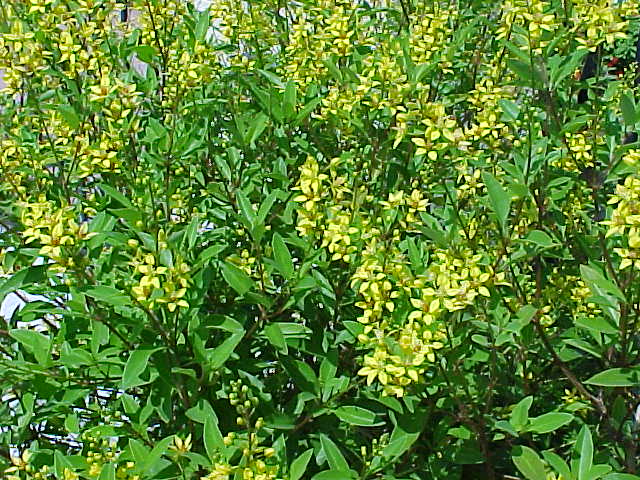
click pics to enlarge Another Miami Herald article by Daphne Duret published August 1, 2003, is headlined "For Hungry Iguana, South Florida is on the Menu" and states in part, "The flower beds at the Crandon Gardens duck pond, which should be a splash of brightly colored thryallis, shooting stars and hibiscus, are now a mass of gnawed-on leaves and withered branches surrounded by a well-chewed lawn. Flora and fauna alike bow to the new kings of the Key Biscayne garden: a tribe of iguanas, many of them former pets, which have grown into a Godzilla-sized problem. They're huge. They're hungry. And they're eating parts of South Florida." Headlines in the Fort Lauderdale Sun-Sentinel Newspaper include these we found,
RESIDENTS FEAR ALLIGATOR, FRIGHT OF THE IGUANA RELEASED AS PETS, FIERCE-LOOKING LIZARDS THRIVE IN SOUTH FLORIDA 4-FOOT IGUANA KILLED AFTER BITING TEENAGER ; REPTILE SEVERS NEW OWNER'S FINGERTIP At this time (November 2003) no private nor government agency is doing anything worth reporting except Lee County which recently (December 2006 hired a trapper @ $20.00 per beast caught). Check your 22 and ammo
Homeowners, you are basically on your own We have read using a product called GarlicGuard works to discourage Iguana munching. We assume GalicGuard is a standard concentrated garlic mixture sprayed on flowers and foliage A new claim is that Neem Oil is a deterrent More news.... we had an accidental lunch (Burger King) with a professional animal trapper. We saw Steve's truck in the parking lot and thought we'd grill him for some iguana tips... Basically, Steve said iguanas are totally comfortable in our South Florida environment and are breeding like crazy. Should you decide to remove the ones who show up on your property, others from nearby areas will soon learn your home is open territory and move in Steve is unaware of homeowners shooting the pests; probably for safety reasons. However, BB guns can ward off persistent iguana lounging in your trees and outdoor people spaces Steve also confirmed their favorite foods are fruits and vegetables, which, unfortunately, includes your flowers. Apparently hibiscus flowers are savored but most other flowers can/will be eaten as well September 2006 it was reported several iguana were found dead, shot with a crossbow
click pic to enlarge
Well, the local newspaper and several radio stations followed up and it was reported that
killing iguana (legal) was not legal
in this case because
using a crossbow was not a
humane manner of elimination ...what does that mean ???
So maybe strangling is OK? How about an AK-47?
click pic to enlarge Flame thrower?
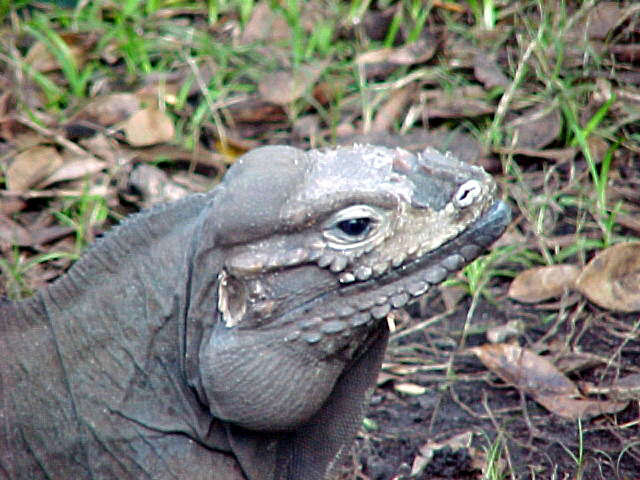
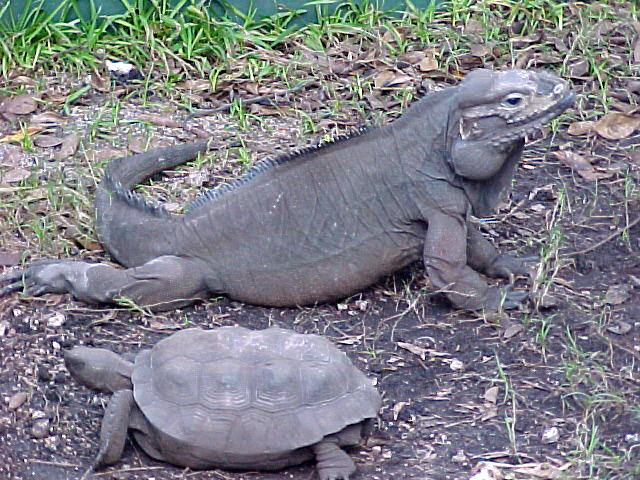
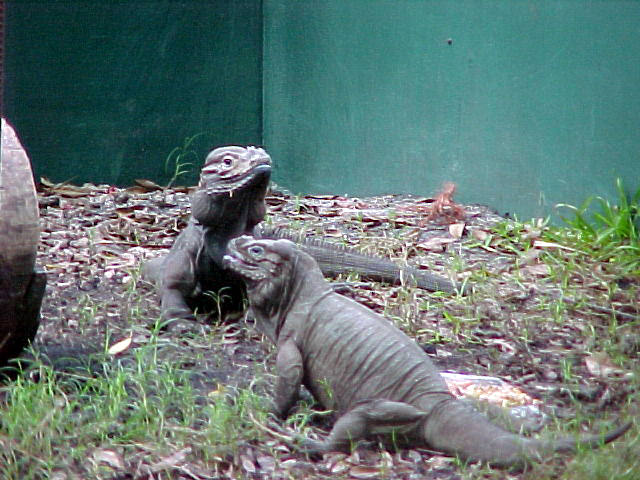
click pic to enlarge Geez, we're doomed There are several other varieties of Iguana. We took these photos at Monkey Jungle
click pics to enlarge There may be hope - an exciting organic solution: An email came in September 29, 2010 from Ruby in Florida. Ruby says "I get rid of Iguanas easily. I play hummingbird sounds from my iPod where they are munching and POOF, they take a powder and do not come back. If others come, I play the sounds and they go away fast. The reason this works is eagles and hawks are natural predators of Iguana. Hummingbird singing is the iguana's alert signal that hawks are close by. WORKS FOR ME." The Wall Street Journal (August 20, 2012) had a front page story about the Iguana invasion of Puerto Rico "To Battle Iguanas, Puerto Rico Has New Plan: Put Them on Menu" Overrun With Repiles, Island Hopes To Export Their Meat: Corraling the Catch Some folks in Puerto Rico calls the beasts "the green plague" as now it appears there are more lizards than people. They arrived in the 1970's as part of the pet trade There isn't much appetite for lizards in Puerto Rico, but exports are booming. Iguana are shipped to Central American countries and even California. Iguana are made into stew or roasted. Naturally, eating Iguana is considered a sexual enhancement. The WSJ quotes a Panamanian who "couldn't believe" his good fortune to have access to plenty of Iguana whereas in Panama lizards are scarce due to hunting and eating The Puerto Rican government is encouraging hunting and export and a local market now includes Iguana for sale to locals. As you might have guessed, PETA in Puerto Rico is "outraged" calling the plan "senseless and cruel" ...go figure. Invasive, destructive, dangerous, but not for PETA Not easy to catch, hunting usually involves a pole and a noose The California customer says there is a "healthy appetite" for Iguana meat and customers also include Asians. "I sell every Iguana I get" So in this troubled Obama economy, South Florida entrepreneurs have a sure thing market to tap. Start trapping !!! Craving more Iguana info and pics? Go here |