This plant may be available to buy
Click the banana to see

|
Carambola click pic to enlarge |
|
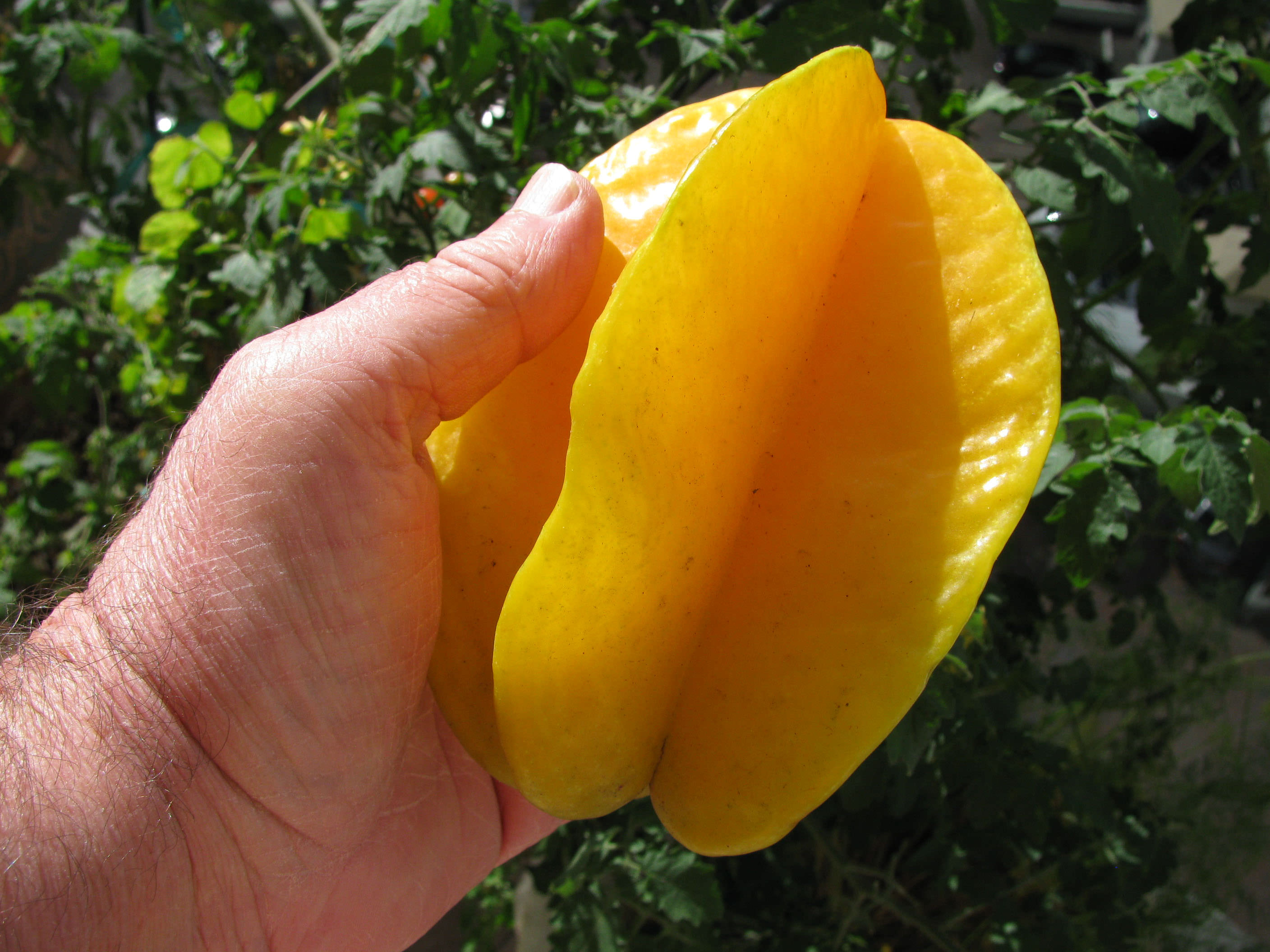
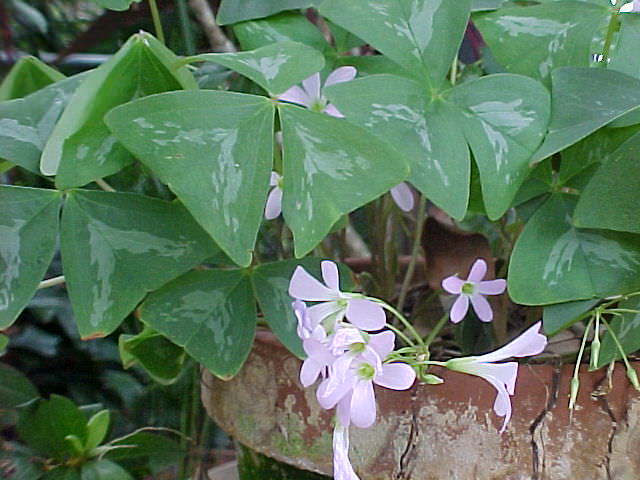
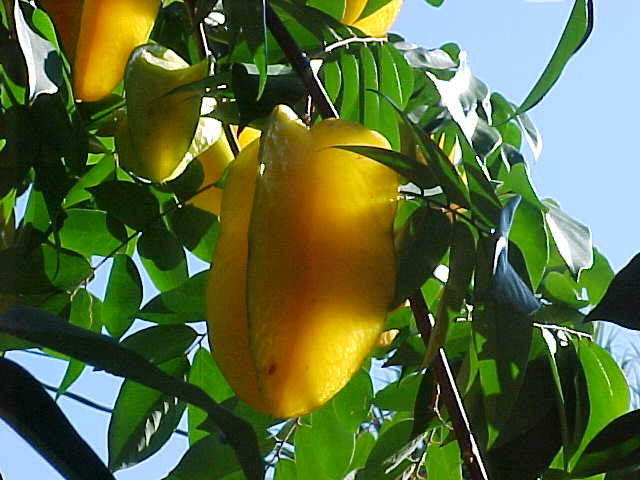
Zone 10 Carambola, Averrhoa carambola, is a wonderful fruit tree native to India and rated to about 30 feet. It is related to Oxalis and nasturtium. The fruit texture is like an apple and tartness can vary among varieties. They are sweeter fully ripe. We have never tasted a bad variety The only two ways to enjoy the magnificent flavor of a ripe carambola is to (1) grow a tree yourself or (2) have a friend give you some ripe fruit from his tree. Carambolas in stores are green, unripe, sour and in no way tastes like the true fresh fruit Below is a perfect tree ripe fruit hmm hmm hmm
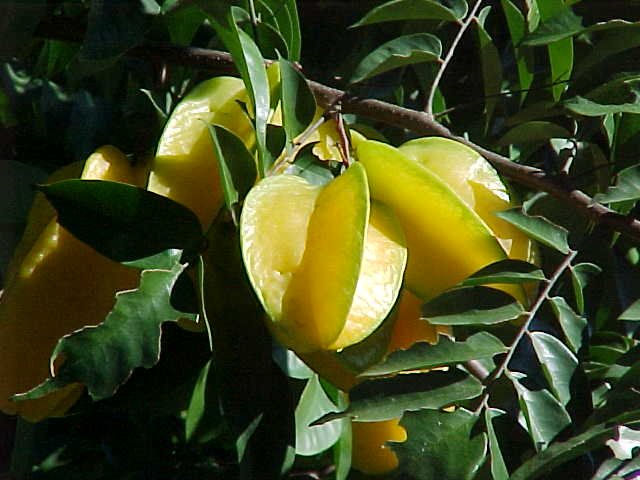
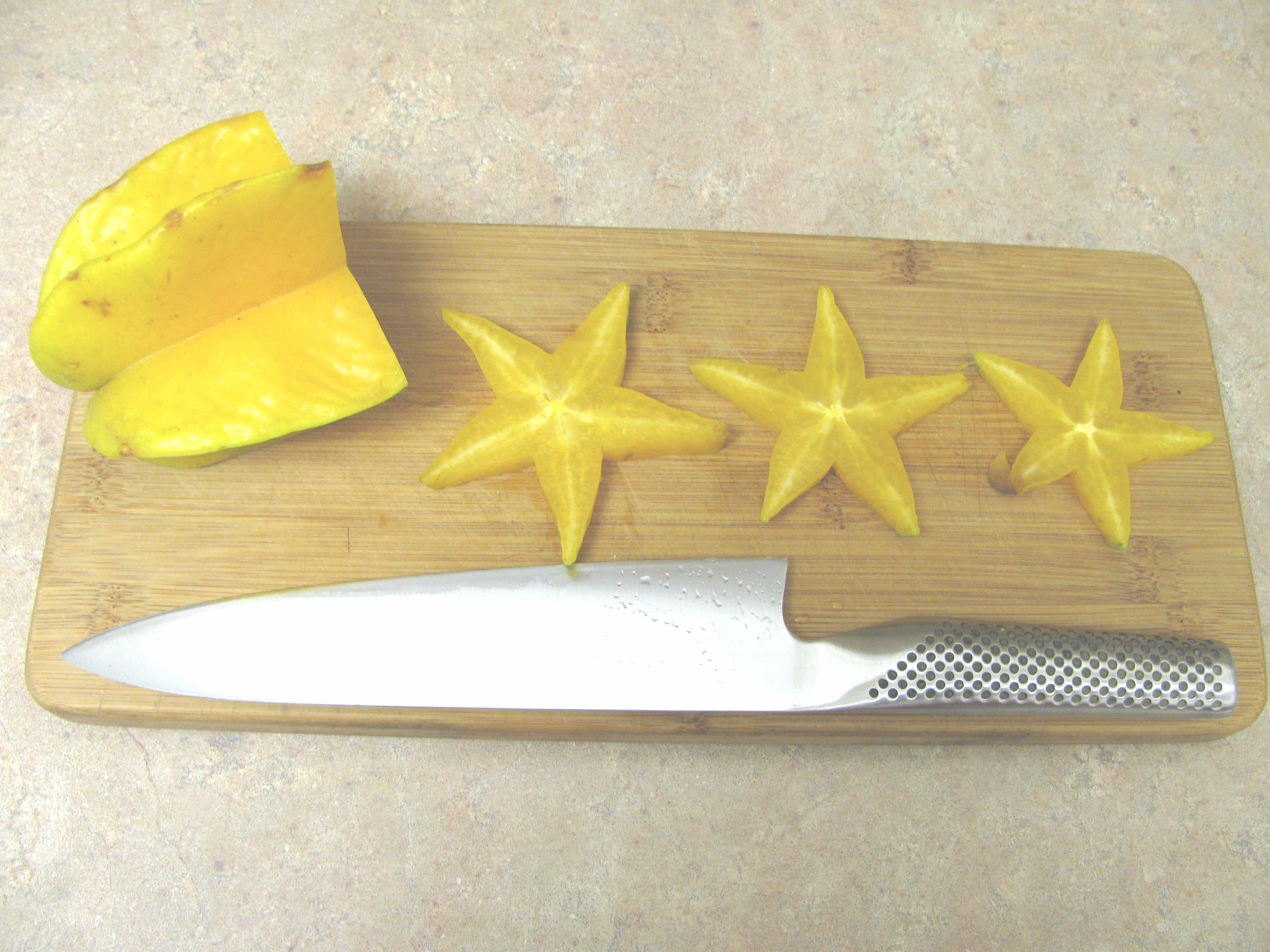
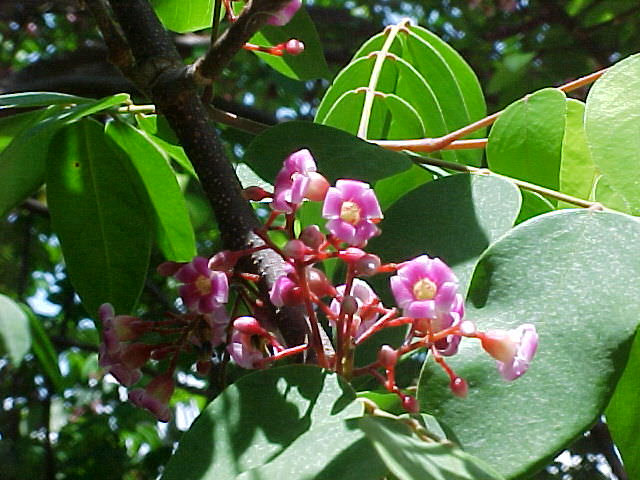
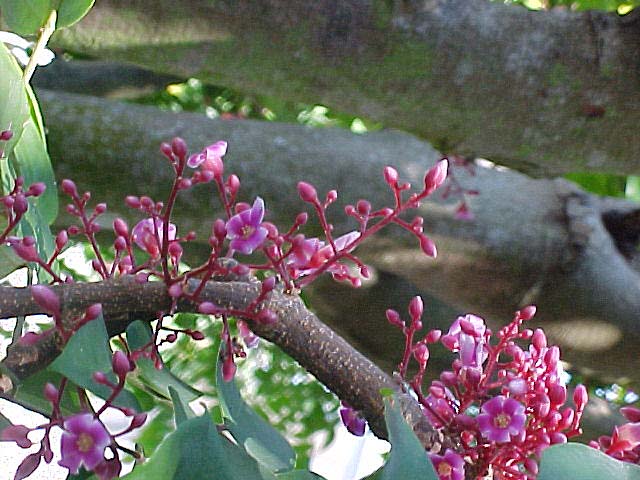
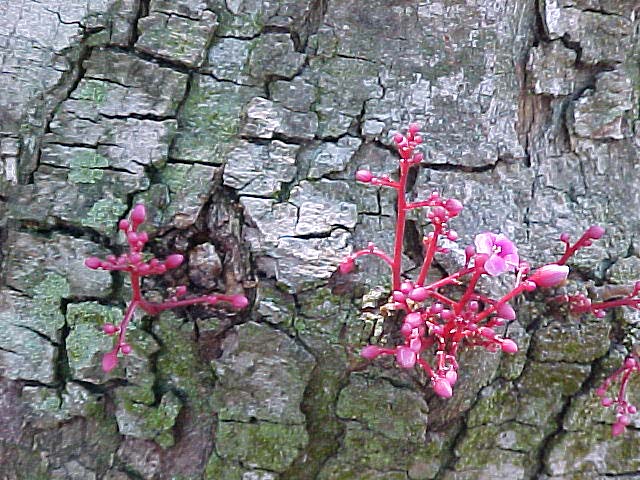
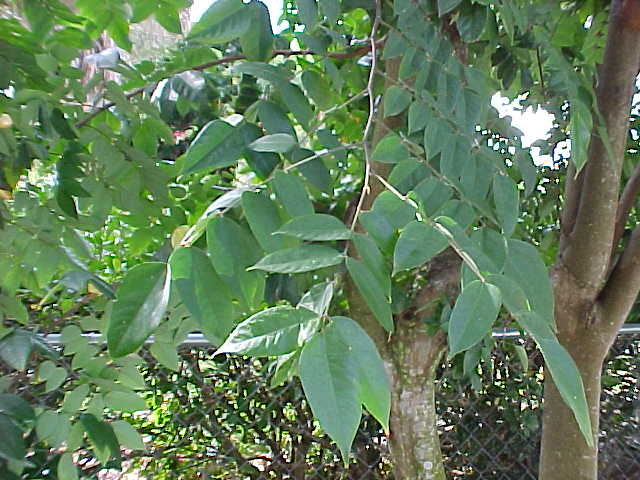
click pic to enlarge Here's a picture of more fruit on the same tree above turning toward ripe. Notice the green edges. Once the edges are fully yellow/orange (depending on variety), the fruit is then perfect for eating Carambola is firm like an apple. It's great to eat right our of hand. More often, the fruit is sliced and when you do, each piece shows a near perfect star shape. Some call carambola "star apple" or "star fruit" for this reason, but there is another tropical fruit with that name The fruit is waxy to the touch but has no coating. A light rinse in water is all that is needed before eating Young carambola trees typically fruit January-February in South Florida. As trees mature, another crop is produced in spring or early summer. The winter crop is heaviest Ripe fruits can be picked off the tree or gathered off the ground after they fall. The sweetest fruit is the most ripe. They hold very well in a bowl for several days or can be chilled before serving. Refrigerated carambola turns brown quickly but retains its flavors. To see why some folks erroneously call Carmbola star apple, click here Flowers are in great masses of tiny purple blooms. They smell sweet and are very attractive. Carambolas produce what seems like 1,000 flowers for every one fruit set. Some flowers are produced off stems off the trunk and heavier woody branches far from the tips with leaves. The leaves are delicate and attractive as well Young trees are seen for sale in 3-gallon pots. Usually the tree is small (less than 3 feet) and shows one thin pencil-like main stem with a few leaves and no side branching. They grow quickly Plant in full sun with a thin stake for a few month while the main stem is thin. They grow fast but mature trees are often less than 20 feet in height. Expect fruit in two years after planting. A maturing tree will produce great amounts of delightful fruit Pruning young trees results in dead wood that usually does not re-sprout. As a tree ages, pruning can produce new growth from cut wood. Basically, leave the tree alone. Fertilize lightly. After becoming established, no special water is required. It's best to plant in a protected area away from winds |